
Precision has moved from a technical preference to a commercial requirement. Customers expect parts that fit perfectly, products that work flawlessly, and devices that last longer than the warranty on the box. Regulators keep raising the bar. Supply chains leave less room for error. In that environment, companies that treat accuracy and repeatability as a strategic discipline pull ahead of those that see it as a cost of doing business. Organizations that invest in advanced tooling, metrology, and process control, such as Beyonics Precision Engineering, show how tight tolerances and disciplined production translate directly into stronger contracts and long-term relationships.
Look at Precision Engineering in Automotive Manufacturing, and the picture becomes even clearer. Modern vehicles resemble rolling computers with safety systems, sensors, and powertrains that depend on microscopic alignment. A single flawed connector, bracket, or machined housing can trigger a recall, damage a brand, or stall a program launch. Precision engineering reduces these risks and builds confidence for OEMs and Tier 1 suppliers. The same logic applies in electronics, medical devices, and industrial equipment, where exact fits and stable performance drive revenue, reduce liability, and protect market share.
Precision Engineering As a Strategic Advantage
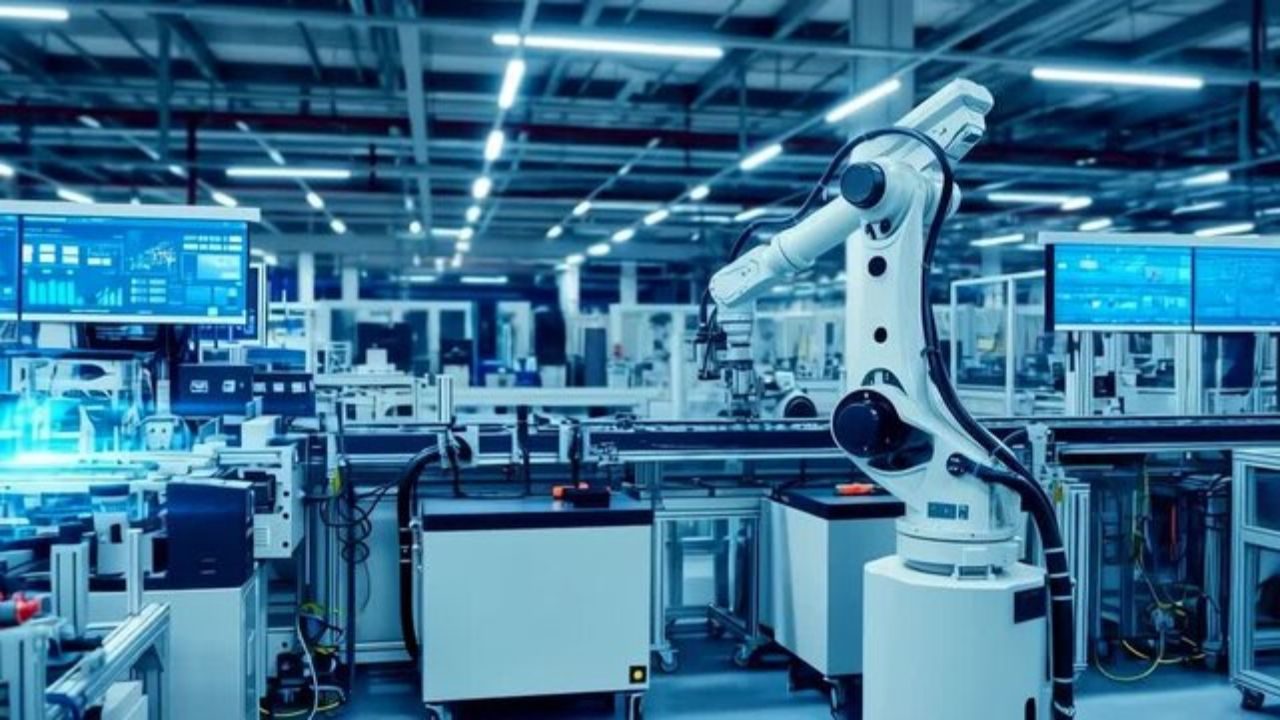
Many companies still treat precision as something that belongs in the quality department. High performers treat it as a business strategy. Senior leaders map revenue goals, market positioning, and technology roadmaps to a clear, precise plan. They define where tolerances matter most, which customers care the most, and where improved accuracy can unlock new segments or higher price points. This mindset turns engineering and manufacturing into commercial levers, not simple cost centers.
Precision also changes how a company talks to its customers. Instead of promising vague notions of “high quality,” the sales team can speak in numbers. They can point to Cp/Cpk, geometric dimensioning capability, surface roughness, and measured defect rates across millions of parts. That level of detail reassures automotive, aerospace, and medtech buyers who manage complex risk portfolios. A supplier who can show statistical evidence of stability often wins long-term supply agreements and earns preferred status in sourcing matrices.
Finally, precision creates an internal sense of clarity. Engineers design with confidence when they know the plant can hold the tolerances they specify. Purchasing teams negotiate smarter when they understand the true cost of high-precision metals, polymers, coatings, or tooling. Operations leaders can commit to launch dates without padding timelines, because the process window is well defined and proven on the line. The result is a tighter loop between commercial promise and technical reality.
Impact on Product Quality and Reliability
When engineers tighten tolerances and align design, process, and inspection, quality metrics improve in ways that customers feel every day. Assemblies fit together cleanly. Fasteners seat correctly. Bearings, seals, and housings operate within their intended clearances, which reduces friction, noise, and heat. This leads to fewer warranty claims and fewer field failures, especially in demanding conditions like high vibration, extreme temperatures, or corrosive environments.
Reliability has a direct financial value. For OEMs, every reduction in early-life failure saves on service calls, replacement parts, and customer support. For contract manufacturers, fewer defects mean fewer returns and disputes. The organization can shift resources from firefighting to innovation. Reputation improves as products remain stable in real-world conditions, and those stories spread through customer engineering teams, purchasing committees, and industry peers.
Precision also supports advanced design features that depend on consistent performance. High-speed spindles, miniature actuators, lidar housings, and high-density connectors need precise geometry to function correctly. If the parts that support those systems drift outside their specified window, the entire product suffers. By holding tight tolerances, manufacturers enable new features, higher speeds, and more compact packages without sacrificing safety or durability.
Efficiency, Yield, and Cost Performance

Precision engineering does more than create better parts. It creates more efficient factories. When processes stay within a narrow, well-characterized window, machines run predictably. Operators spend less time sorting, reworking, or adjusting setups. Scrap drops. Changeovers become repeatable and faster. This stable environment increases overall equipment effectiveness and allows planners to schedule with greater confidence.
Higher yield has a direct impact on unit cost. Every percentage point of scrap reduction frees material, labor, and machine time. Companies that collect detailed process data can identify which dimensions drive the most rework, then improve tooling, fixtures, and programming. Over time, they build a library of proven setups and parameter sets for each product family. That knowledge reduces launch headaches for new variants and helps new plants or lines reach target performance sooner.
Precision also enables smarter automation. Robots, pallet systems, and automatic inspection equipment perform best when parts arrive in consistent condition and position. Tighter process control reduces variation that might confuse sensors or vision systems. This stability allows manufacturers to push toward lights-out operations in machining, stamping, molding, or assembly. Cost advantages then scale, because each additional unit produced on a stable, automated line carries a smaller slice of overhead.
Innovation in High-Tech and Emerging Industries
Modern technology sectors place extreme demands on precision. Semiconductor equipment, optics, advanced medical devices, and battery systems rely on machined and molded parts that operate at micro or even nano scales. Design teams in these sectors seek suppliers who not only hold tight tolerances but also participate in early concept work and design for manufacturability reviews. That collaboration shortens development cycles and reduces the number of iterations needed to move from prototype to volume production.
Precision engineering also supports miniaturization and higher functional density. Think of sensor-rich automotive modules, compact medical implants, or 5G infrastructure hardware. Engineers want to pack more capability into smaller footprints, often with strict thermal and electromagnetic constraints. To achieve this, every bracket, frame, and housing must conform to a well-defined envelope. When the manufacturing function can guarantee that envelope, designers have more freedom to innovate in electronics, firmware, and system architecture.
New materials and processes raise the bar even further. Additive manufacturing, advanced composites, and new alloy families require careful control of thermal cycles, post-processing, and finishing. Precision in these areas opens space for lighter structures, improved strength-to-weight ratios, or better corrosion resistance. Companies that specialize in process development, metrology, and robust validation win work in these future-facing sectors because they give customers confidence to adopt new technologies without taking on uncontrolled risk.
Risk Management, Compliance, and Customer Trust
Every quality problem carries hidden costs. In regulated industries such as medical devices, automotive safety components, and aerospace, a single nonconforming batch can trigger investigations, audits, and intense regulatory scrutiny. Precision engineering reduces these events by tightening control around critical-to-safety characteristics and by maintaining complete traceability from raw materials to finished goods. Robust documentation and digital records then support audits and customer reviews.
Risk reduction extends along the supply chain. When a manufacturer demonstrates consistent process capability and strong gauge control, OEMs can reduce incoming inspection, shorten qualification cycles, and lower their contingency budgets. This improves margins on both sides. Customers begin to treat the supplier as a low-risk partner, which often leads to inclusion in new platform programs and long-term sourcing strategies. Trust grows, project by project.
Compliance also has a marketing effect. Certifications like IATF 16949, ISO 13485, or AS9100 signal discipline, but they only carry real weight when backed by measured performance. Precision helps close that loop. When customers see stable PPAP results, low ppm defect rates, and quick containment actions on the rare issue that does arise, they gain confidence that the certification means something. That mix of formal compliance and practical stability supports premium pricing and multi-year agreements.
Building a Precision Culture Across the Value Chain
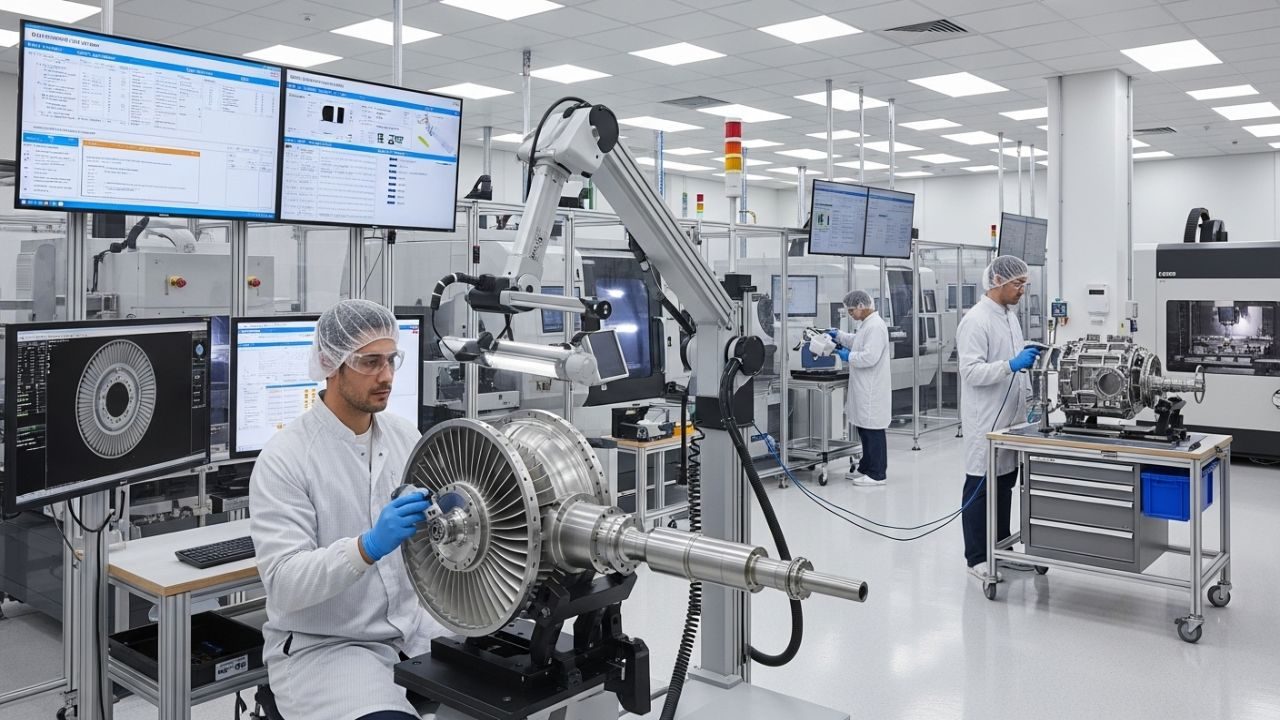
True precision does not stay confined to the machining center or the metrology lab. It spreads through the entire organization. Designers think differently about tolerancing and geometric dimensioning. Process engineers involve toolmakers, production planners, and quality specialists early in new product introduction. Operators learn to treat setup sheets and work instructions as living documents, refined through continuous improvement. This culture encourages people to identify variation drivers and eliminate them step by step.
Suppliers and partners play a role as well. A company committed to precision will qualify material vendors based on consistency, not only price. It will share data on variation and collaborate on improvements in slitting, heat treatment, plating, or molding. Logistics partners will track and control environmental conditions where necessary, especially for sensitive materials or components. Customers feel this coherence when they see stable performance across product families and plants, even during periods of high demand or rapid change.
Leadership commitment holds everything together. Senior managers set clear targets for scrap, rework, and process capability. They invest in equipment upgrades, metrology, training, and digital tools such as SPC systems, MES platforms, and digital twins. They celebrate teams that improve yields or solve recurring tolerance issues. Over time, precision becomes part of the company’s identity. The market then recognizes that identity and rewards it with more complex projects, collaborative development work, and deeper, more resilient commercial ties.
Leave a Reply